

Projects
What standards apply to commercial HVAC ductwork?
Two of the key standards used in commercial HVAC ductwork are AS 4254 and the SMACNA HVAC Duct Construction Standards.
AS 4254.2 sets requirements for the materials, construction and installation of rigid ductwork used in building air-handling systems, while SMACNA provides widely recognised technical guidance covering duct fabrication, reinforcement, joints, fittings, sealing, supports and installation.
For mechanical contractors, architects and HVAC specifiers, these standards help ensure ductwork is manufactured and installed consistently, is appropriate for the system's operating requirements, and can deliver reliable performance throughout the life of the building.
AS 4254 and SMACNA: The Standards Behind Quality HVAC Ductwork
When you specify or purchase commercial HVAC ducting, you’re not simply buying fabricated sheet metal. You’re buying part of an engineered air-handling system that needs to perform reliably once it is installed.
That’s why recognised industry standards matter.
At ARLO, our ductwork manufacturing is guided by two important industry benchmarks: AS 4254 and SMACNA HVAC Duct Construction Standards. Together, they provide established requirements and guidance around how ductwork is manufactured, reinforced, joined, supported and installed.
For mechanical contractors, this helps provide confidence that the ductwork arriving on site has been manufactured with real-world installation and system performance in mind. For engineers, consultants and architects, it provides a recognised framework that can be incorporated into project specifications.
What is AS 4254?
AS 4254 is the Australian Standard covering ductwork for air-handling systems in buildings. For commercial rigid metal ductwork, the relevant standard is AS 4254.2-2012 – Ductwork for air-handling systems in buildings, Part 2: Rigid duct.
The standard sets out requirements covering the materials, construction and installation of rigid ductwork, along with aspects of its performance. It applies to ductwork used in buildings and facilities, including systems designed in accordance with AS/NZS 1668.1 and AS 1668.2.
In practical terms, AS 4254.2 helps establish expectations around areas such as:
- duct materials and construction
- sheet metal thickness and reinforcement
- joints, seams and connections
- sealing
- duct supports and installation
- system pressure and structural performance.
Rather than treating ductwork as a collection of individual pieces of sheet metal, the standard considers how those components need to work together as an installed air-handling system.
What is SMACNA?
SMACNA stands for the Sheet Metal and Air Conditioning Contractors’ National Association. Its technical standards and manuals are widely recognised throughout the international HVAC and sheet metal industry.
Of particular relevance to ARLO is the SMACNA HVAC Duct Construction Standards – Metal & Flexible, which provides detailed technical guidance for the fabrication and installation of commercial and institutional ductwork.
SMACNA covers areas including duct dimensions, materials, reinforcement, joints, fittings, pressure classes, supports and installation methods across rectangular, round and other duct configurations. The latest fourth edition also includes updated information covering areas such as spiral duct fittings, flat oval ductwork, duct sealants and hanger requirements.
Because of the level of practical construction detail it provides, SMACNA is particularly useful in translating engineering requirements into ductwork that can actually be manufactured and installed efficiently.
Why do AS 4254 and SMACNA matter to mechanical contractors?
For mechanical contractors, standards-compliant ductwork is fundamentally about reducing uncertainty.
Ductwork has to arrive on site correctly fabricated, fit together as intended and be capable of performing under the conditions for which the HVAC system has been designed.
Standards provide a common technical reference between the designer, duct manufacturer and mechanical contractor.
For example, the required pressure class can influence sheet thickness, reinforcement, joint construction and sealing. Larger duct dimensions may require additional reinforcement to maintain structural integrity. The way sections are connected and supported also affects both installation and long-term performance.
Getting these details right during manufacture can help reduce the risk of problems emerging once installation is underway.
For contractors working to tight construction programmes, that matters. Correctly manufactured ductwork means less improvisation, fewer modifications and potentially less remedial work on site.
Why do these standards matter to architects and specifiers?
For architects, engineers and other project specifiers, AS 4254 and SMACNA provide something equally important: a recognised technical benchmark for what is being designed and supplied.
A specification that references established standards gives everyone involved in the project a clearer definition of the expected duct construction.
It can also help specifiers consider practical issues earlier in the design process.
Duct dimensions, pressure requirements, reinforcement, supports, joints and fittings can all affect the amount of space an HVAC system occupies. In congested ceiling spaces and plant areas, these details can have implications for coordination with structure, electrical services, hydraulics, fire systems and architectural elements.
This becomes particularly relevant when comparing different ductwork configurations.
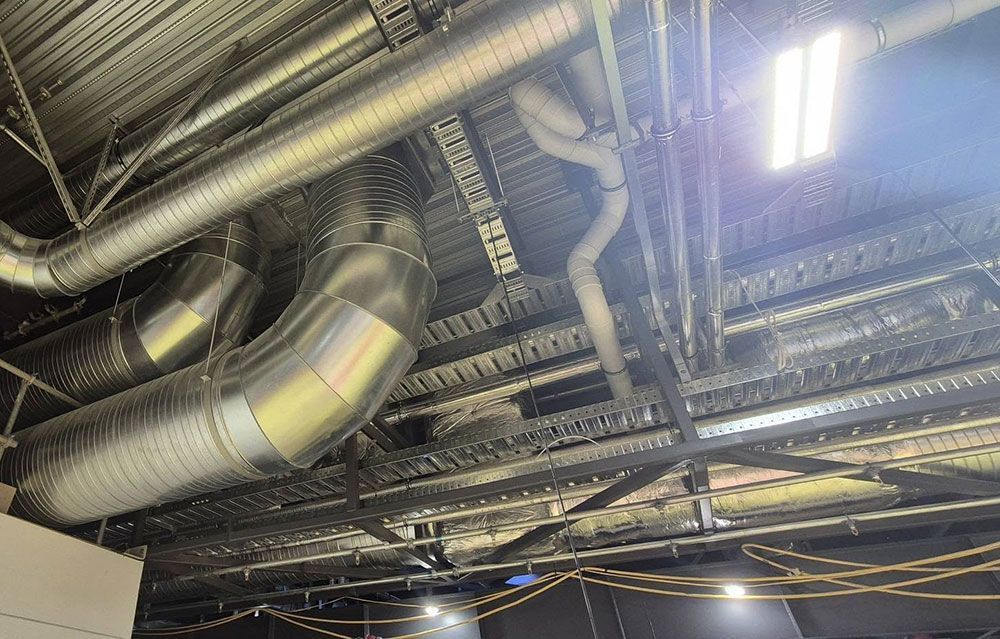
For example, ARLO's SPIRO round ducting can offer advantages where exposed services are part of the architectural design, while its inherent structural efficiency and long, prefabricated sections can also simplify installation in suitable applications.
Standards help ensure those decisions are based not only on appearance or available space, but on the actual performance and construction requirements of the duct system.
How do the standards affect duct manufacture?
One of the biggest benefits of recognised duct construction standards is consistency.
They provide established parameters that manufacturers can work to when determining how a particular section of ductwork should be fabricated.
Depending on the system and specification, this can influence:
Material selection and thickness
The duct needs sufficient structural strength for its dimensions, configuration and operating conditions.
Reinforcement
Larger rectangular duct sections or higher-pressure applications may require additional reinforcement to prevent excessive movement or deformation.
Joints and connections
Connections need to provide appropriate structural integrity while allowing duct sections to be assembled efficiently on site.
Sealing
Leakage can compromise HVAC efficiency and system performance, making appropriate sealing an important part of duct manufacture and installation.
Fittings and transitions
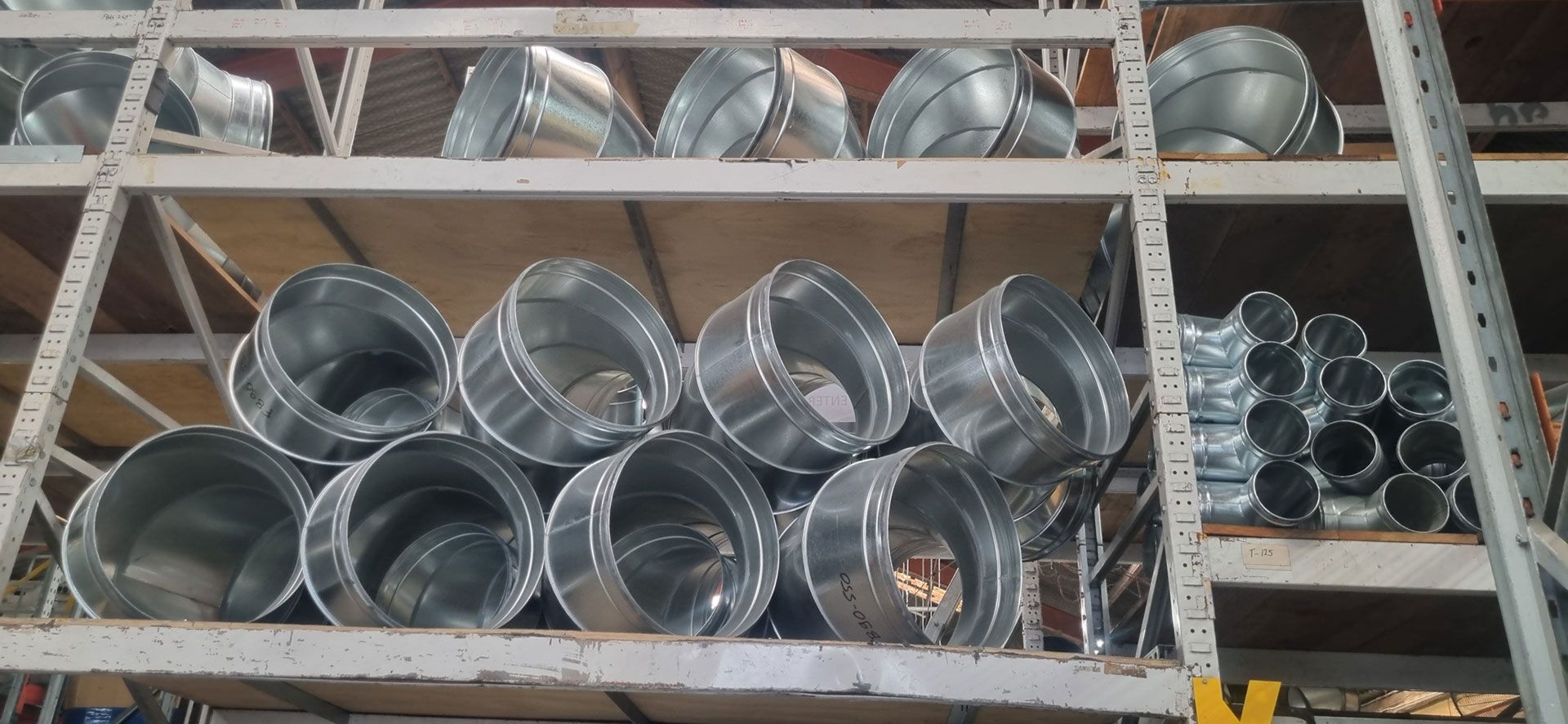
Elbows, reducers, branches and other fittings need to be fabricated appropriately so that the complete duct system can be assembled and perform as designed.
SMACNA's construction standards, for example, provide detailed tables and construction guidance for metal ductwork across different positive and negative pressure applications.
How do the standards affect duct installation?
Good ductwork performance doesn't end at the factory door.
Even accurately fabricated ductwork can perform poorly if it isn't assembled, sealed and supported correctly on site.
Installation requirements therefore form an important part of duct construction standards. Support spacing and methods, joint assembly, sealing and the way ductwork interfaces with other system components can all affect the finished installation.
This is also where manufacturing and installation need to work together.
At ARLO, we see ducting as a system rather than a collection of individual components. The more that can be resolved through design, detailing and controlled factory fabrication, the less that needs to be solved on site.
That approach supports one of the key principles behind industry standards: achieving predictable, repeatable performance from the completed duct system.
It can also support faster installation.
Prefabricated sections, accurately manufactured fittings and consistent connection systems reduce the amount of cutting, adjusting and fabrication required in the field. In projects where labour availability and programme pressure are major concerns, that can translate into significant practical benefits.
Standards create a common language
Perhaps the biggest value of AS 4254 and SMACNA is that they create a common technical language between everyone involved in an HVAC project.
The architect or consultant establishes the requirements. The mechanical contractor interprets those requirements into a deliverable system. The duct manufacturer turns the design into physical components. The installation team assembles those components into the completed HVAC system.
Recognised standards help connect each of those stages.
For customers, that means greater confidence that ductwork has not simply been manufactured to "what we normally do", but against established industry principles covering construction, performance and installation.
Building quality into the system
For ARLO, adherence to recognised ductwork standards is part of a wider approach to quality.
It means combining established manufacturing principles with modern fabrication, systemised production (IPC - Integrated Project Control) and practical installation experience.
Whether we're producing rectangular ductwork, SPIRO ducting or custom steel ductwork, the objective is the same: manufacture a system that meets the project requirements, performs as intended and can be installed efficiently on site.
For mechanical contractors, that helps reduce installation risk and improve project delivery.
For architects, engineers and specifiers, it provides confidence that what has been designed can be translated into properly manufactured, buildable ductwork.
And for building owners, it contributes to an HVAC system designed to perform reliably for the long term.
Need to discuss ductwork requirements for an upcoming project? Talk to ARLO about compliant commercial HVAC ducting, custom fabrication and installation solutions for projects across New Zealand and Australia.
Related Reading
Firstly, find the best HVAC ducting supplier:
Choose the Right Fabrication Partner for Reliability, Cost & Timelines
Get the fundamentals right of quality performance:
The Hidden Value of High-Quality Ducting
What makes an HVAC system efficient?
Top 7 Custom Ducting Features for Efficient HVAC Systems
Then explore how to design ducting that can adapt:
Designing for Flexibility in Modern HVAC Systems
Understand why on-time delivery is everything:
Availability & Speed in Construction
Understand the true costs of installation
Labour Hire vs Managed Installation