Projects

How Are Data Centres Cooled? An Airflow and Ductwork Perspective for New Zealand and Australia

Paul Bondsfield • August 19, 2026

How Are Data Centres Cooled? 


Data centres present a very different HVAC challenge from most commercial buildings. Instead of primarily maintaining comfortable conditions for people, their cooling infrastructure must continuously manage the heat generated by servers and other IT equipment.


The precise cooling solution depends on the facility, its location, IT load, resilience requirements and the decisions of the specialist mechanical and data-centre design teams. But whatever technology is used to remove the heat, one principle remains important: air needs to be managed and moved efficiently through the areas of the facility that rely on air cooling.


That makes airflow design—and the ductwork that supports it—an important part of the wider cooling infrastructure.


For mechanical contractors working on the growing number of data-centre projects in New Zealand and Australia, the challenge isn't simply supplying cooling capacity. It is helping to deliver a mechanical system that performs as designed, can be installed efficiently and can operate reliably over the life of the facility.

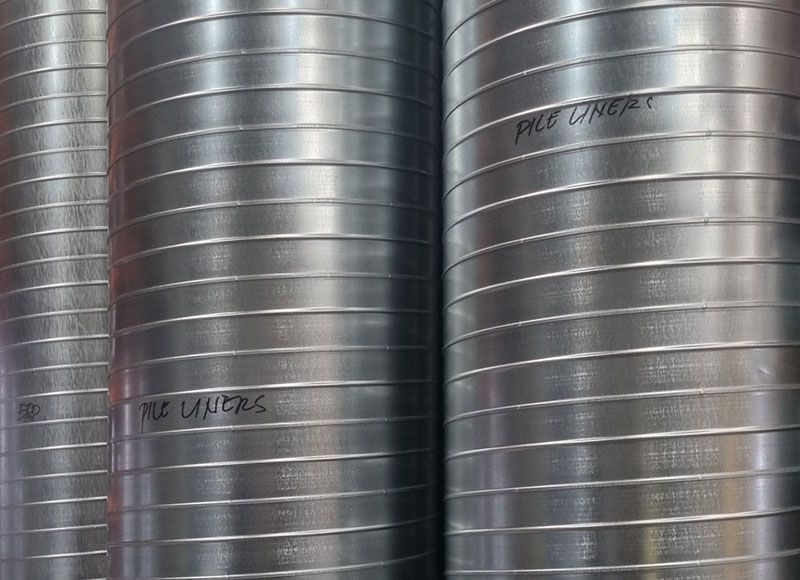
Britomart in Auckland: Galvanised Ducting


Why is data-centre cooling different?


Servers and other IT equipment consume electricity and generate heat while operating. Unlike an office, where HVAC demand changes considerably according to occupancy, time of day and external conditions, data centres can generate substantial heat loads around the clock.


That heat has to be continuously removed.


The consequences of ineffective cooling can also be considerably greater than an uncomfortable office. Maintaining appropriate conditions for IT equipment is an important part of supporting performance and reliability.


This is why cooling infrastructure represents such a significant part of data-centre mechanical design.


Different facilities use different combinations of cooling technologies, including chilled-water systems, computer room air handlers (CRAH), computer room air-conditioning (CRAC) systems, economisation or "free cooling", and increasingly liquid-assisted cooling for particularly high-density computing.


Selecting and designing those systems is specialist engineering work.


However, for areas and equipment that remain air cooled, how effectively that conditioned air is distributed and returned is fundamental to cooling performance.

Airflow matters as much as cold air


One of the central challenges in an air-cooled data centre is relatively straightforward to understand.


Cool air needs to reach the air intakes of the IT equipment, while the heated exhaust air needs to be removed without unnecessarily mixing back into the cool supply air.


That is why data centres commonly use arrangements such as hot and cold aisles and various forms of containment.

The US Department of Energy's Best Practices Guide for Energy-Efficient Data Center Design, for example, identifies strict hot-aisle/cold-aisle arrangements as a way of significantly increasing the air-side cooling capacity of a data-centre cooling system. It also emphasises reducing recirculation and keeping supply and return air separated.


The underlying principle is relevant well beyond the server racks themselves:


Cooling air that doesn't reach where it is required represents wasted effort and energy.


Likewise, unwanted mixing between cool supply air and hot return air can reduce the effectiveness of the overall cooling system.


ASHRAE's (American Society of Heating, Refrigerating and Air-Conditioning Engineers) current guidance on data-centre energy and thermal efficiency therefore puts fundamental air management - including containment, airflow control and minimising bypass and recirculation - ahead of more advanced interventions.


New Zealand data-centre projects operate within the requirements of the New Zealand Building Code and applicable NZ and joint Australian/New Zealand standards. For specialist data-centre thermal design, project teams may also draw on internationally recognised standards and guidance, including ASHRAE and ISO/IEC standards.

In Australia, data-centre projects are subject to the National Construction Code (NCC) and relevant Australian Standards covering building services, ventilation, fire and smoke control, and energy efficiency. Standards such as AS 1668 also apply to aspects of ventilation, air-conditioning and smoke control. For specialist data-centre thermal design and infrastructure, project teams may additionally draw on internationally recognised guidance and standards, including ASHRAE and the ISO/IEC 22237 series.


Where does ductwork fit into data-centre cooling?


Not every data centre distributes cooling in the same way, and not every part of a data centre is cooled through conventional ductwork.


But where ducted air distribution forms part of the mechanical design, the same fundamentals that apply to other high-performance HVAC systems become particularly important.


Ductwork needs to:


  • deliver the required airflow according to the mechanical design
  • minimise unnecessary leakage and resistance
  • accommodate the available building and services space
  • integrate accurately with plant, equipment and other services
  • be manufactured and installed to (or above) the required standards
  • allow the completed system to be balanced and commissioned as intended.


Return-air pathways can be equally important. Depending on the design, these may involve ductwork, ceiling plenums or other arrangements intended to move heated air back towards the cooling equipment while limiting unwanted mixing.


There is no single duct configuration that is right for every data centre.


Instead, the role of the ductwork manufacturer and mechanical contractor is to turn the engineer's airflow design into a physical system that can be manufactured accurately, coordinated with the building and installed efficiently.

Round or rectangular ductwork?


Data centres can involve substantial quantities of ductwork and significant coordination with electrical, fire, structural and other building services.


This makes the choice of duct configuration important.


Rectangular ductwork provides considerable flexibility where available space or services coordination dictates the shape of the air path. Custom rectangular sections, transitions and fittings can be fabricated to suit complex mechanical layouts.


Round spiral ductwork can provide advantages where the design and available space allow it. Its geometry can provide efficient airflow characteristics, structural rigidity and a high degree of consistency, while prefabricated duct and fittings can also help simplify installation.


In practice, a data-centre project may use both.


The appropriate solution should therefore be driven by the mechanical design rather than by a preference for one duct type.


The important question is: What duct system will most effectively deliver the specified airflow while meeting the project's spatial, programme, installation and performance requirements?


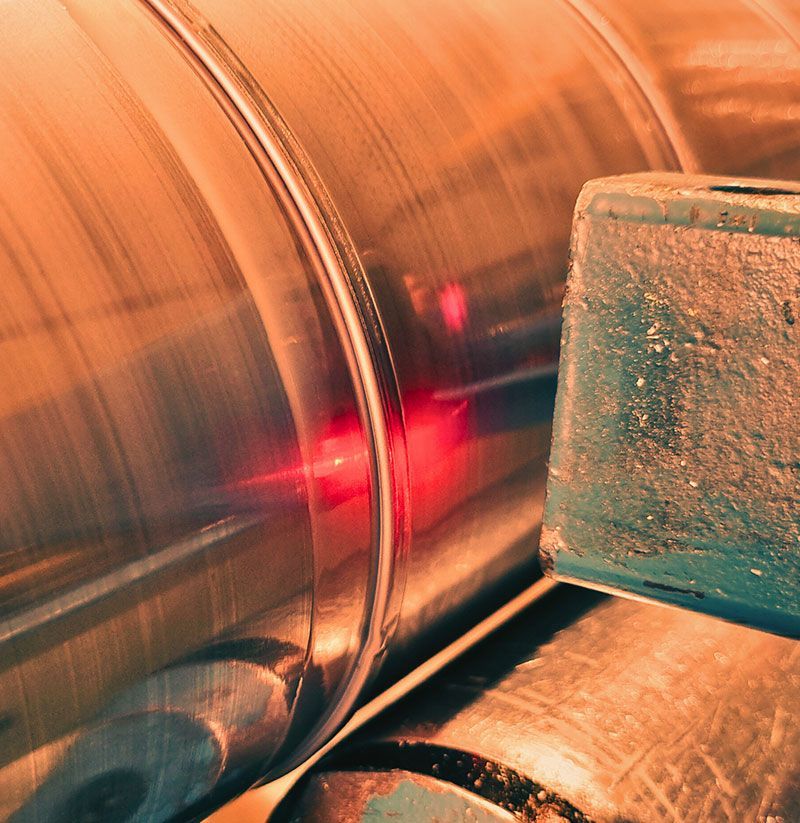
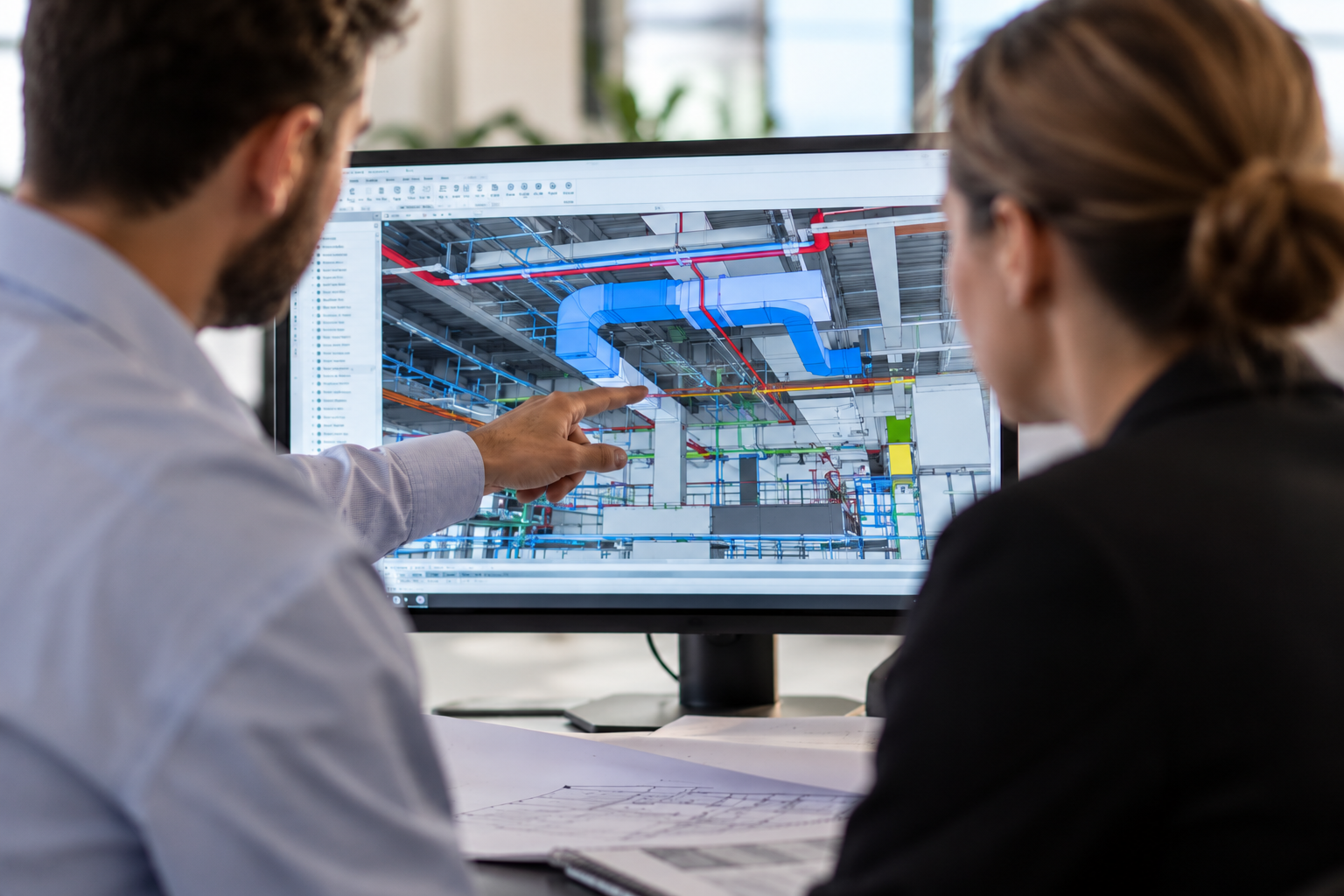
Laser-accurate HVAC Duct Manufacturing


Why fabrication accuracy matters


Data-centre projects are typically highly coordinated environments.


Mechanical ductwork may need to pass through spaces containing substantial quantities of electrical infrastructure, cable containment, pipework, fire services and structural elements. Small changes in one service can have consequences for several others.


This puts a premium on accurate coordination between design, fabrication and installation.


For the duct manufacturer, that means more than simply producing individual pieces of sheet metal.


Dimensions, connections, fittings, transitions and interfaces all need to correspond with the coordinated mechanical design. Manufacturing consistency becomes particularly important where projects involve large quantities of repeat ductwork.


Effective communication between the mechanical contractor, design team, duct manufacturer and installation team can therefore help reduce site modifications and avoid unnecessary disruption during installation.

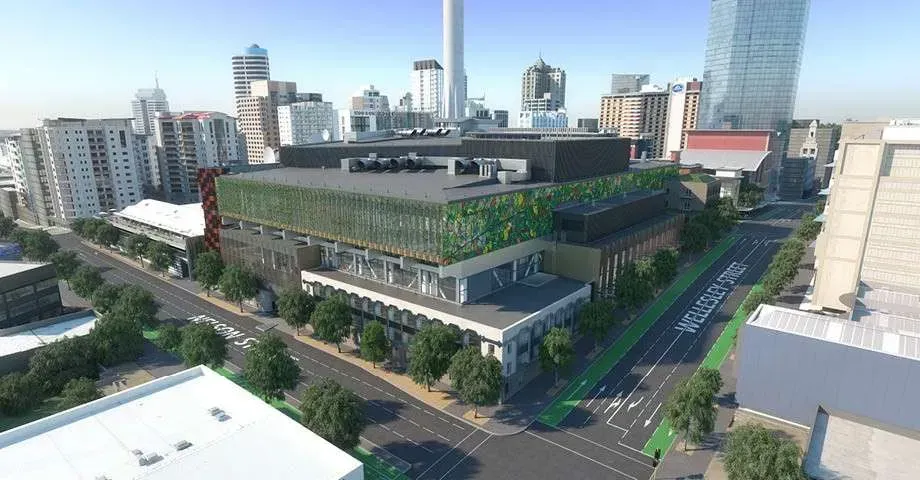
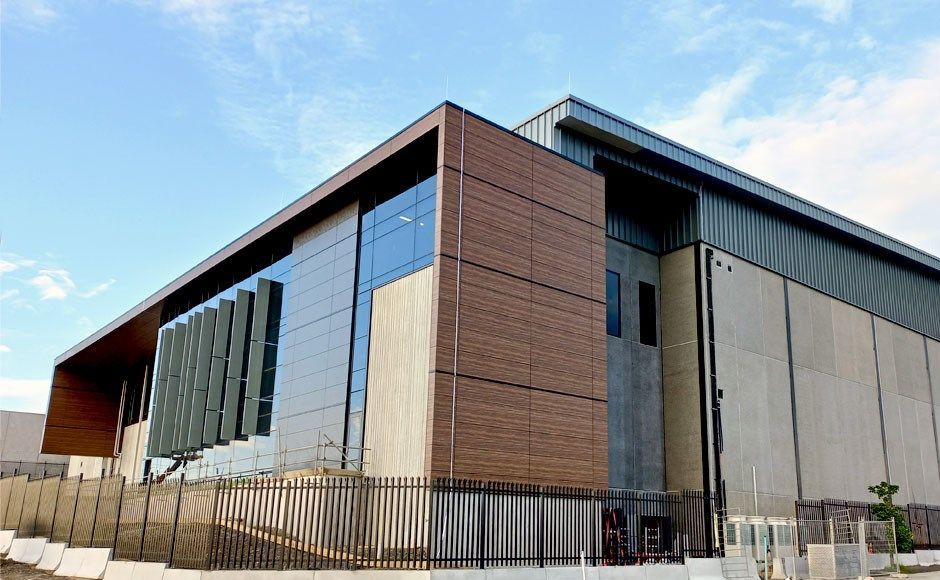
Auckland Data Centre


New Zealand's climate creates an interesting context


New Zealand's relatively temperate climate can be advantageous for some data-centre cooling strategies. Although even here the southern climate (cold winters and hot summers) can contrast with the all-year-round warm temperatures in the north.


When outside conditions permit, appropriately designed systems may be able to make greater use of economisation or "free cooling", reducing the amount of compressor-based mechanical cooling required. ASHRAE identifies airside, waterside and refrigerant-based economisation as potential approaches, with the appropriate solution depending on climatic conditions and system design.


That does not mean New Zealand data centres are simple to cool, nor that every facility should use the same approach.

The actual cooling strategy will depend on location, humidity, facility design, IT load, equipment requirements, resilience criteria and many other engineering considerations.


But it does reinforce an important point: data-centre cooling should be designed for the environment in which the facility will operate.

Australia presents a wider climatic range


The same principle becomes even more apparent across Australia.


A data centre in Melbourne operates in a substantially different climatic environment from one in Brisbane. Ambient temperature, humidity and seasonal variation can all influence the cooling strategies available to the design team.


Australia is also paying increasing attention to data-centre energy performance as the sector grows. The Australian Government has undertaken specific work examining international approaches to data-centre energy efficiency and the potential policy response to their increasing energy use.


Again, the implications for ductwork are not that one particular system should be specified.


Rather, the air-distribution infrastructure needs to support the cooling strategy selected for that particular facility and location.

Data-centre cooling is changing


The cooling requirements of data centres are continuing to evolve, particularly as AI and other high-performance computing applications increase the amount of heat that can be generated within individual racks.


Liquid cooling is consequently becoming increasingly important for high-density computing. ASHRAE's current guidance discusses direct-to-chip liquid cooling and other liquid-assisted technologies specifically in relation to higher-density AI loads.


That doesn't make air distribution irrelevant.


Data centres contain much more than high-density server racks. Mechanical and electrical plant areas, lower-density IT equipment, UPS (Uninterruptable Power Supply) and support spaces, offices and other parts of the facility can all have their own ventilation and cooling requirements.


Many facilities are therefore likely to involve combinations of cooling technologies rather than one universal solution.

For mechanical contractors, that makes coordination and flexibility increasingly important.


Getting the fundamentals right


Data-centre cooling can quickly become a highly technical subject. Specialist engineers rightly determine cooling architecture, redundancy, controls, equipment selection and operating parameters.


But underneath that complexity are some relatively simple HVAC fundamentals.


Where air is being used to remove heat, it needs to reach the right place. Hot and cold air need to be managed appropriately. Unnecessary leakage, recirculation and resistance should be minimised. And the physical air-distribution system needs to reflect the intent of the mechanical design.


For ductwork manufacturers and mechanical contractors, that is where their expertise becomes relevant.


It isn't about designing the data centre's cooling strategy.


It is about manufacturing and installing the air-distribution infrastructure that enables that strategy to work as intended.


ARLO and data-centre HVAC infrastructure


ARLO manufactures commercial HVAC ductwork for major building and infrastructure projects across New Zealand and Australia.


Our role on a data-centre project is clear: we work with mechanical contractors and project teams to turn the specified ductwork design into accurately manufactured, installation-ready HVAC infrastructure.


With capability across custom rectangular ductwork and SPIRO® spiral duct systems, ARLO can manufacture solutions to suit different airflow, spatial and installation requirements.


For complex and programme-sensitive projects, manufacturing capacity, coordination, consistency and reliable delivery can be just as important as the duct itself.


As investment in data-centre infrastructure grows across New Zealand and Australia, getting those fundamentals right will remain an important part of delivering the cooling infrastructure these facilities depend on.


Related Reading


Firstly, find the best HVAC ducting supplier:

Choose the Right Fabrication Partner for Reliability, Cost & Timelines


Ensure your duct supplier works to recognised standards for guaranteed quality.

Which standards apply to commercial HVAC ductwork?


Get the fundamentals right of quality performance:
The Hidden Value of High-Quality Ducting


Rectangular or Spiral?

When to Use Rectangular or Spiral Ducting for HVAC Projects


Then explore how to design ducting that can adapt:
Designing for Flexibility in Modern HVAC Systems


Choose the best material for your project's environment and performance requirements
Galvanised Steel, Stainless Steel or Aluminium HVAC Ducting: Which Material Is Right for Your Project?


Understand the true costs of installation
Labour Hire vs Managed Installation


Air distribution in Data Centres
By Paul Bondsfield August 20, 2026
Data Centres are complex buildings so getting HVAC ducting right is critical. Six areas for mechanical contractors and duct manufacturers to be aware of for success.
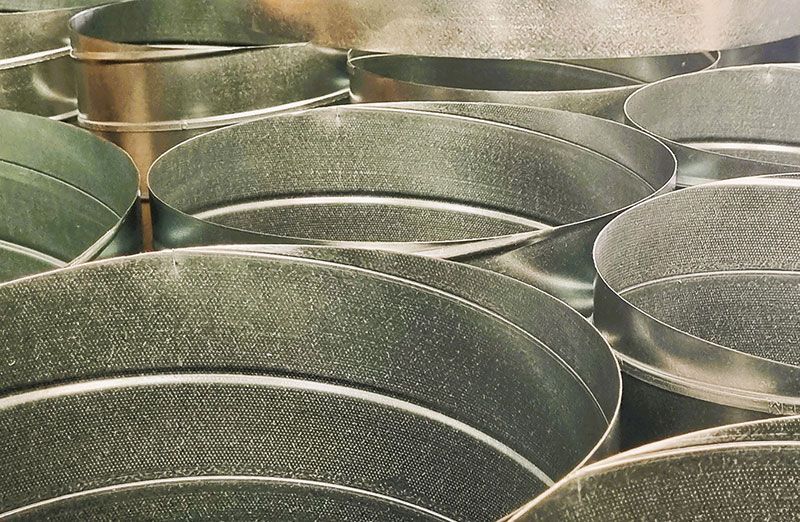
SPIRO Galvanised Steel HVAC Ducting
By Paul Bondsfield August 12, 2026
Galvanised steel is most common for HVAC ducting because of all-round performance, availability, speed of production, value and adherence to industry standards
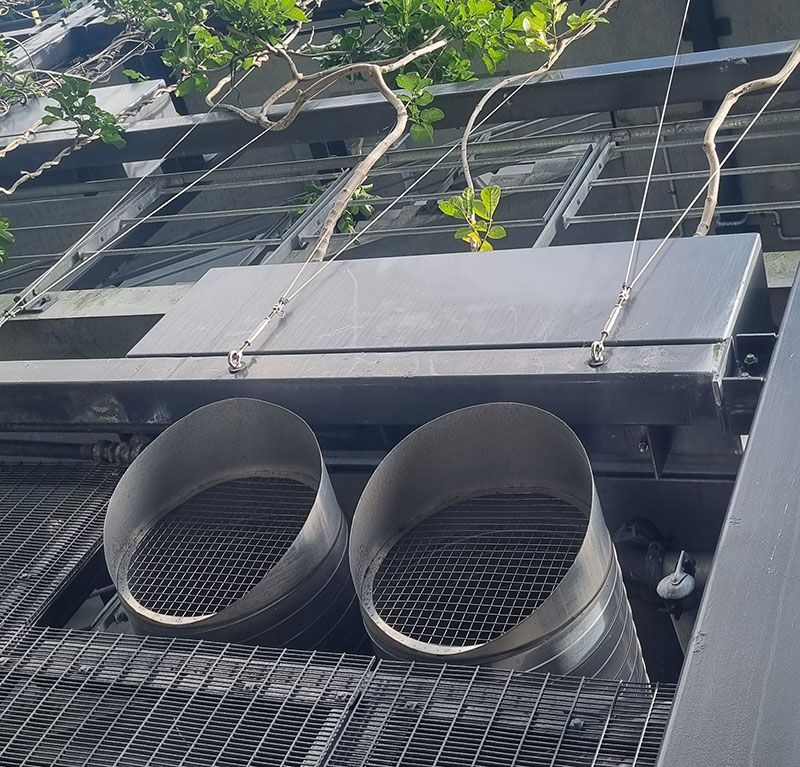
By Paul Bondsfield August 11, 2026
What is the best material for HVAC ducting: galvanised steel, stainless steel or aluminium? It depends on the location, environment and performance requirements
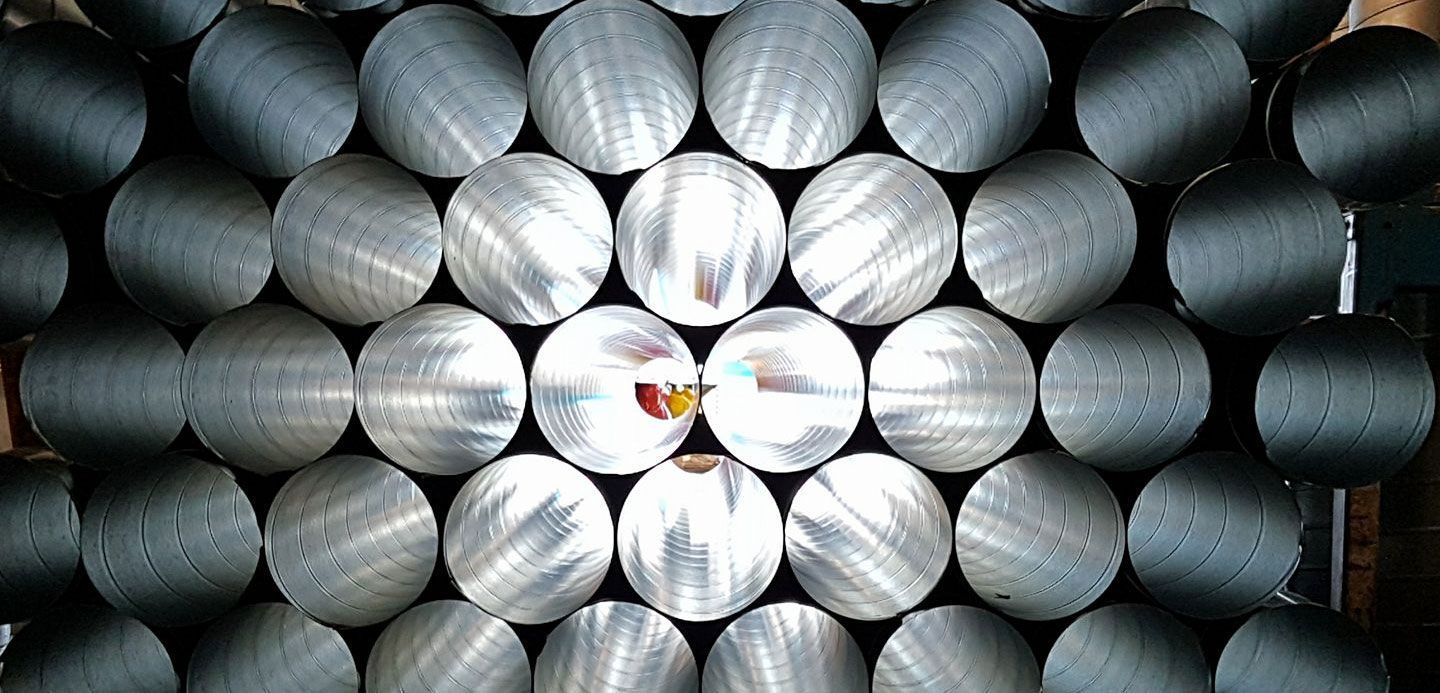
ARLO SPIRO HVAC  Ducting - SMACNA & AS4254 compliant. Photographed end-on
By Paul Bondsfield August 4, 2026
Learn how AS 4254 and SMACNA standards guide commercial HVAC ductwork manufacture and installation, and why they matter to contractors and specifiers.
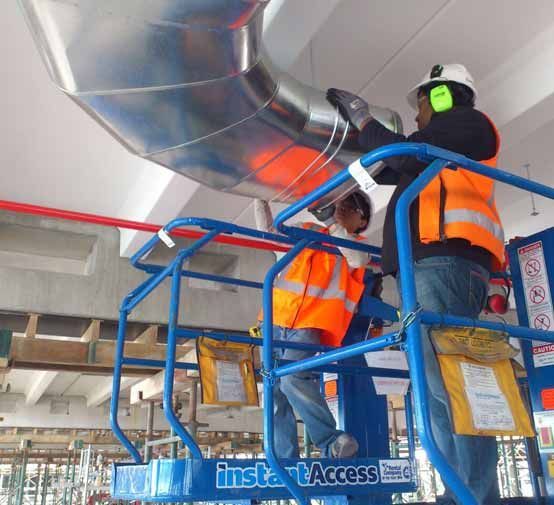
Efficient HVAC Installation
By Paul Bondsfield July 31, 2026
Choose HVAC ducting systems that install faster with less on-site assembly. Learn how commercial ducting solutions improve efficiency, reduce labour costs, and keep HVAC projects on schedule.
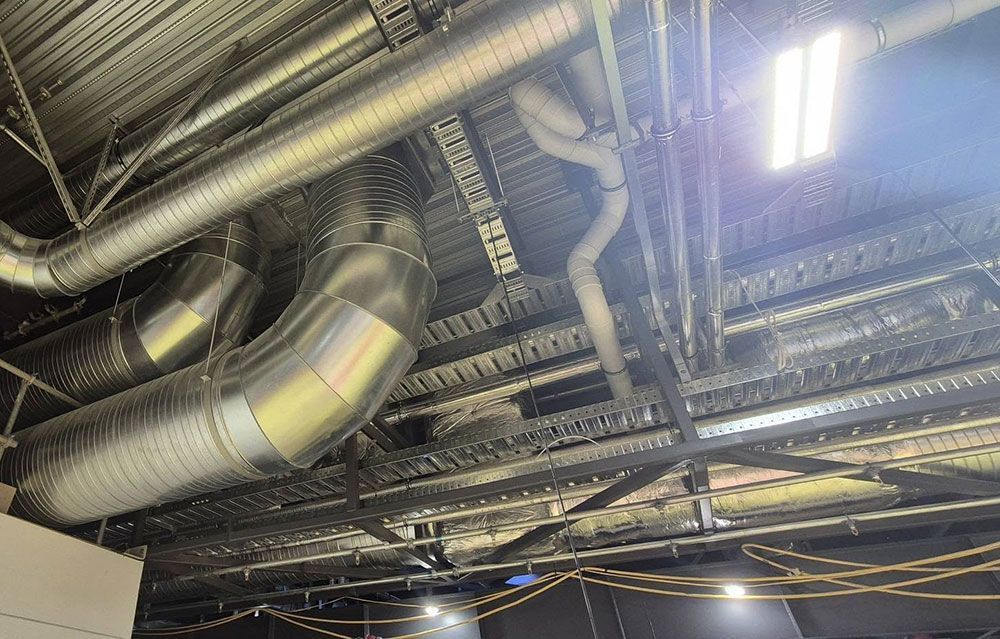
By Paul Bondsfield July 29, 2026
When to use round duct, rectangular duct or oval duct on HVAC projects. The pros and cons of each shape profile
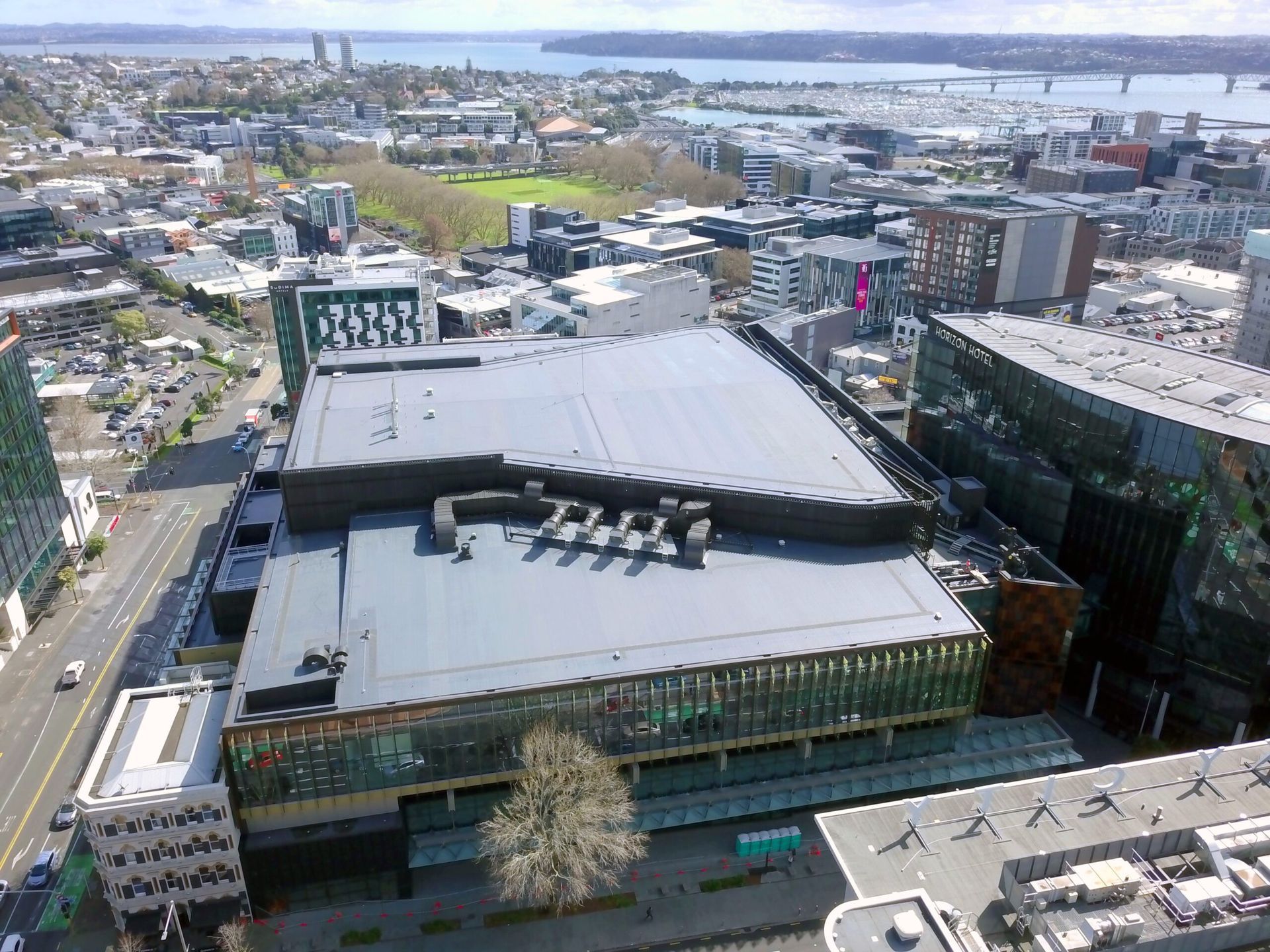
By Paul Bondsfield July 28, 2026
Discover the best metal HVAC ducting for large buildings and infrastructure projects, comparing quality, flexibility, availability and performance
By Paul Bondsfield July 22, 2026
Custom steel ducting fabrication is the process of manufacturing HVAC ductwork to the exact dimensions and performance requirements of a commercial building. It improves installation efficiency, supports better airflow, reduces onsite modifications, and helps contractors deliver projects on time and within budget. When commercial HVAC projects demand precise performance, fast installation, and reliable long-term operation, custom steel ducting fabrication becomes one of the most important parts of the mechanical system. Unlike standard off-the-shelf ductwork, custom fabrication produces ducting that is designed and manufactured specifically for a project's building layout, airflow requirements, equipment, and installation sequence. For commercial HVAC installation contractors, this means fewer compromises, fewer site modifications, and greater confidence that the ductwork will fit first time.
By Paul Bondsfield June 24, 2026
Discover the 7 most important custom ducting features that improve HVAC efficiency, reduce energy costs, and optimise airflow in commercial buildings.
Production facility capacity is key
By Paul Bondsfield June 23, 2026
Custom steel ducting fabrication guide for commercial HVAC contractors. Learn how to choose reliable ducting suppliers based on cost, lead times and project performance.
Show More