
Projects
Galvanised Steel, Stainless Steel or Aluminium HVAC Ducting: Which Material Is Right for Your Project?
What is the best material for HVAC ducting?
The best HVAC ducting material depends on where the system will operate, the environment it will be exposed to, and the performance requirements of the building.
For most commercial buildings, galvanised steel provides the best balance of strength, durability and cost. Stainless steel is the preferred choice for corrosive, hygienic or high-temperature environments, while aluminium offers excellent corrosion resistance with reduced weight for specialised applications.
Choosing the correct material from the beginning helps improve system lifespan, reduce maintenance and ensure compliance with
project specifications.
Why material selection matters
When people think about HVAC performance, they often focus on fans, filters or controls. But the ducting itself forms the backbone of the entire air distribution system.
The material affects:
- durability
- corrosion resistance
- installation weight
- maintenance requirements
- fabrication complexity
- long-term operating costs
- compliance with project specifications
Different environments demand different solutions.
A hospital plant room has very different requirements from a coastal resort, commercial office tower or food processing facility.
Galvanised Steel Ducting
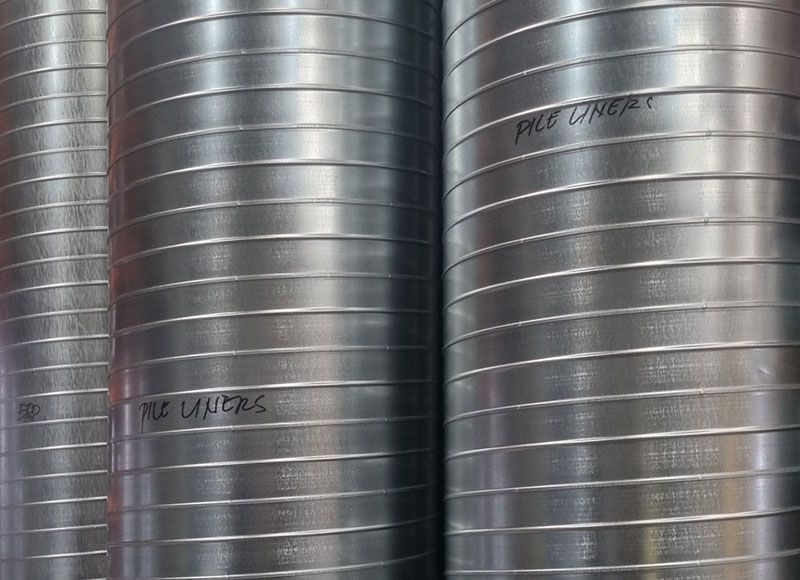
Galvanised steel is the most common material used in commercial HVAC systems throughout Australia and New Zealand.
It consists of mild steel coated with zinc, which protects the underlying steel from corrosion.
Advantages:
Cost-effective
Galvanised steel offers the lowest overall cost for most commercial projects while still providing excellent durability.
Strong and rigid
Its structural strength allows long duct runs while maintaining shape and minimising deformation during installation.
Easy to fabricate
Manufacturers can produce rectangular, round and custom ductwork quickly using standard fabrication processes.
Widely specified
Most commercial buildings—including offices, schools, retail centres and warehouses—use galvanised ducting because it meets the majority of performance requirements at the lowest installed cost.
Best suited for
- Commercial buildings
- Office developments
- Shopping centres
- Warehouses
- Schools
- Hospitals (non-corrosive areas)
- Data centres
- General industrial buildings
Stainless Steel Ducting
Stainless steel provides significantly greater corrosion resistance than galvanised steel.
Rather than relying on a protective coating, the alloy itself resists corrosion thanks to its chromium content.
The two most common grades are:
- 304 Stainless Steel
- 316 Stainless Steel (higher corrosion resistance)
Although considerably more expensive, stainless steel is often essential in demanding environments.
Advantages:
Superior corrosion resistance
Ideal where moisture, chemicals or salt exposure would rapidly degrade galvanised steel.
Hygienic surface
Its smooth finish is easy to clean and makes it suitable for environments with strict hygiene requirements.
High temperature performance
Stainless steel maintains strength at elevated temperatures and handles thermal cycling well.
Long service life
In harsh environments, stainless steel often provides the lowest lifetime cost despite its higher purchase price.
Best suited for
Food manufacturing
Pharmaceutical facilities
Commercial kitchens
Chemical processing
Wastewater treatment plants
Coastal buildings
Marine facilities
Laboratories
Aluminium Ducting
Aluminium is selected where weight reduction or corrosion resistance are the primary considerations.
While not as strong as steel, it offers several advantages in the right applications.
Advantages
Lightweight
Aluminium weighs approximately one-third as much as steel, making transportation and installation easier.
Naturally corrosion resistant
Unlike steel, aluminium forms its own protective oxide layer. This makes it particularly useful in coastal or humid environments.
Easy to handle
The reduced weight can improve installation efficiency, particularly on renovation projects or roof-mounted systems.
Limitations
Because aluminium is softer than steel, it dents more easily and generally requires additional consideration for structural support on larger duct sections.
Best suited for
- Coastal buildings
- Marine applications
- Swimming pools
- Lightweight roof installations
- Specialist ventilation systems
Comparing HVAC Ducting Materials
| Feature | Galvanised Steel | Stainless Steel | Aluminium |
|---|---|---|---|
| Initial Cost | 5 / 5 | 2 / 5 | 3 / 5 |
| Corrosion Resistance | 3 / 5 | 5 / 5 | 4 / 5 |
| Structural Strength | 5 / 5 | 5 / 5 | 3 / 5 |
| Weight | Heavy | Heavy | Very Light |
| Hygiene | Good | Excellent | Good |
| Fabrication Speed | Excellent | Very Good | Good |
| Typical Service Life | Long | Very Long | Long |
| Typical Applications | Commercial buildings | Food, marine, pharmaceutical | Coastal, lightweight systems |
Which material should you choose?
There is rarely a universally "best" material.
Instead, experienced HVAC designers match the ducting material to the building's operating environment.
Generally:
- Choose galvanised steel for the majority of commercial HVAC systems where cost, strength and availability are the priorities.
- Choose stainless steel where corrosion, hygiene or high temperatures are significant concerns.
- Choose aluminium where lightweight construction or enhanced corrosion resistance outweigh the need for maximum structural strength.
In many projects, multiple materials are used together. For example, a hospital may primarily use galvanised ducting throughout the building while specifying stainless steel in kitchen exhaust systems or specialised treatment areas.
Don't overlook fabrication quality
Regardless of material, the performance of a duct system also depends on how it is manufactured.
Poorly fabricated ductwork can introduce air leakage, installation delays and maintenance issues regardless of whether it is made from galvanised steel, stainless steel or aluminium.
Look for a manufacturer that offers:
- precision fabrication
- compliance with AS 4254 and SMACNA standards
- experienced engineering support
- custom manufacturing capability
- reliable lead times
- consistent quality control
Material selection and manufacturing quality work together to determine the long-term performance of the HVAC system.
Frequently Asked Questions
Is galvanised steel suitable for most commercial HVAC systems?
Yes. Galvanised steel is the standard choice for most commercial buildings because it provides an excellent balance of durability, strength, availability and cost.
When should stainless steel ducting be used?
Stainless steel should be specified where the ducting is exposed to chemicals, moisture, salt air, food production environments or applications requiring high hygiene standards.
Is aluminium ducting better than galvanised steel?
Not necessarily. Aluminium is lighter and more corrosion resistant but is generally less rigid and more expensive than galvanised steel. The right choice depends on the project requirements.
Can different ducting materials be used on the same project?
Yes. Many commercial projects combine galvanised steel, stainless steel and aluminium in different parts of the HVAC system to optimise performance and cost.
Conclusion
No single ducting material is ideal for every HVAC application. Galvanised steel remains the workhorse of commercial air distribution thanks to its strength, affordability and versatility. Stainless steel excels in corrosive and hygienic environments, while aluminium offers valuable weight and corrosion advantages for specialised installations.
Related Reading
Firstly, find the best HVAC ducting supplier:
Choose the Right Fabrication Partner for Reliability, Cost & Timelines
Ensure your duct supplier works to recognised standards for guaranteed quality.
Which standards apply to commercial HVAC ductwork?
Get the fundamentals right of quality performance:
The Hidden Value of High-Quality Ducting
What makes an HVAC system efficient?
Top 7 Custom Ducting Features for Efficient HVAC Systems
Then explore how to design ducting that can adapt:
Designing for Flexibility in Modern HVAC Systems
Understand why on-time delivery is everything:
Availability & Speed in Construction
Understand the true costs of installation
Labour Hire vs Managed Installation