
Projects
When to Use Rectangular or Spiral Ducting for HVAC Projects.
What is Better for HVAC Projects: Spiral or Rectangular Ducting?
Choosing between rectangular and spiral ducting affects more than airflow. It can influence fabrication costs, installation labour, programme time, coordination with other services and the overall installed cost of a commercial HVAC system.
Both formats have an important role in modern HVAC ducting systems. Rectangular ducting provides exceptional flexibility where space is constrained, while round spiral ducting can offer significant advantages in airflow, material efficiency and installation speed.
For commercial HVAC contractors, the decision should therefore consider more than which duct will fit.
Where the building design allows it, spiral ducting can often provide a simpler, faster and more cost-efficient route from fabrication through to installation. Where space is tight or complex geometry is unavoidable, rectangular ducting provides the flexibility required to make the system work.

Rectangular vs spiral ducting: the quick answer
Spiral ducting is often the preferred option where installation speed, airflow efficiency, reduced leakage and overall installed cost are priorities. Rectangular ducting is particularly valuable where ceiling space is restricted, or the ductwork needs to fit closely around structures and other building services.
Rather than defaulting automatically to rectangular ductwork, HVAC teams can benefit from identifying where round ducting could simplify the system and reduce installation time.
| Consideration | Rectangular ducting | Spiral ducting |
|---|---|---|
| Restricted ceiling spaces | Excellent | Can be limited by diameter |
| Airflow efficiency | Good when correctly designed | Excellent |
| Material efficiency | More sheet metal for equivalent area | Efficient perimeter-to-area ratio |
| Leakage potential | More seams and joints to manage | Generally fewer potential leakage points |
| Structural rigidity | Larger sizes may require reinforcement | Naturally rigid |
| Installation speed | Good with effective prefabrication | Often faster on suitable runs |
| Supports | Can require more complex support arrangements | Often relatively simple |
| Long duct runs | Effective | Particularly well suited |
| Customisation | Excellent | Wide range of standard and custom fittings |
| Exposed applications | Functional appearance | Often architecturally preferred |
| Space coordination | Highly flexible | Best where sufficient clearance exists |
Why consider spiral ducting first?
For many commercial HVAC projects, the traditional question has been: Where can we use rectangular ducting?
A more useful starting point may be: Where can we use spiral ducting, and where do the building constraints require us to change to rectangular?
That matters because the choice of duct profile can have consequences throughout the project.
Round ductwork can potentially reduce:
- the amount of sheet metal required
- the number of joints along long runs
- sealing requirements
- reinforcement
- installation complexity
- time spent assembling ductwork on site
- overall installation labour.
Why can spiral ducting be faster to install?
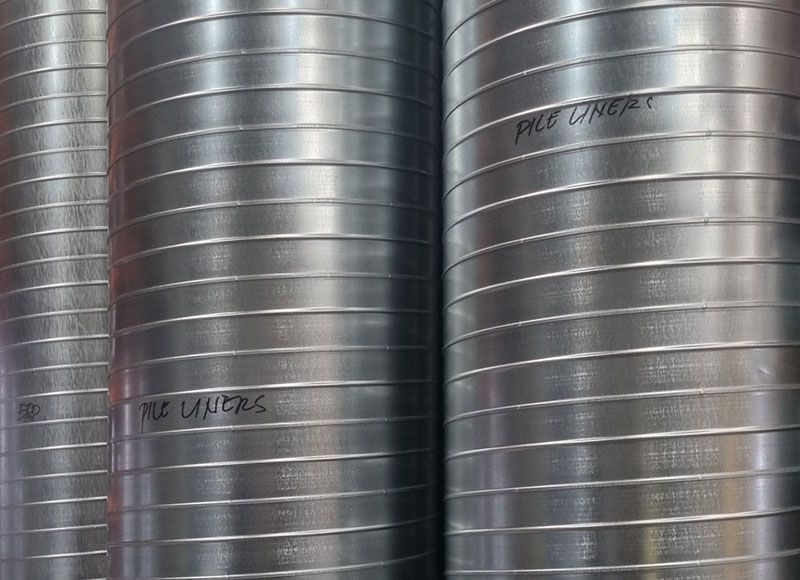
Spiral ducting can often be installed faster because long, rigid sections can create a simpler duct run with fewer joints and less assembly on site.
Installation labour is a major component of the total cost of commercial ductwork. That means the price of the fabricated duct is only part of the cost equation.
Consider everything that has to happen after ductwork reaches site.
Sections need to be unloaded, moved into position, supported, connected, sealed and coordinated with surrounding services. Every additional joint, fitting or site modification requires time.
Round spiral ducting can simplify several of these activities.
Longer, Simpler Runs
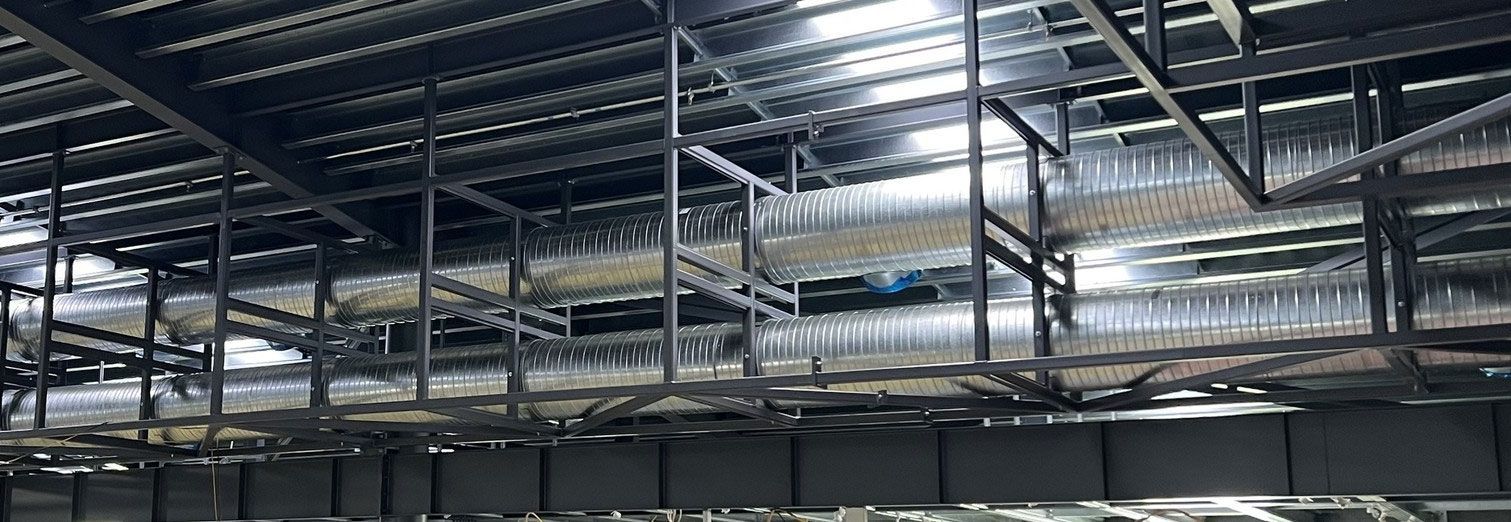
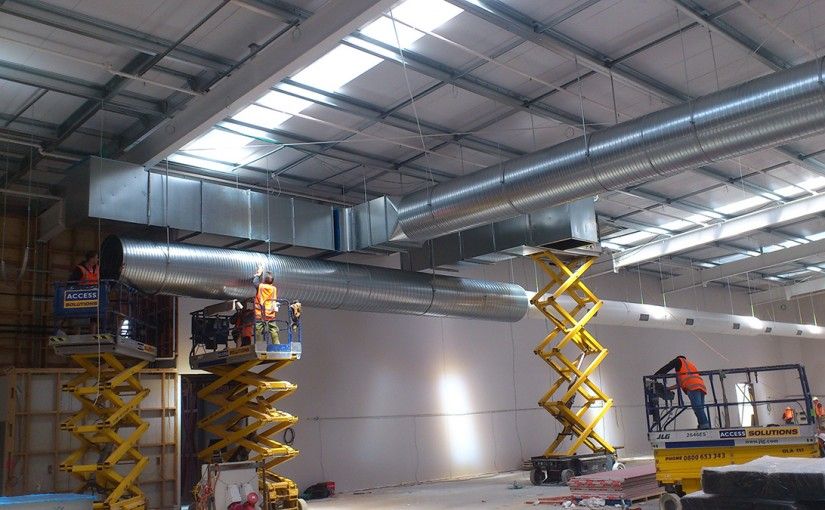
Spiral duct is particularly well suited to long, relatively straight runs. Using longer sections can mean fewer individual pieces need to be positioned and joined compared with a system made up of numerous shorter fabricated sections.
Fewer connections can mean less assembly and sealing on site.
Inherent Structural Strength
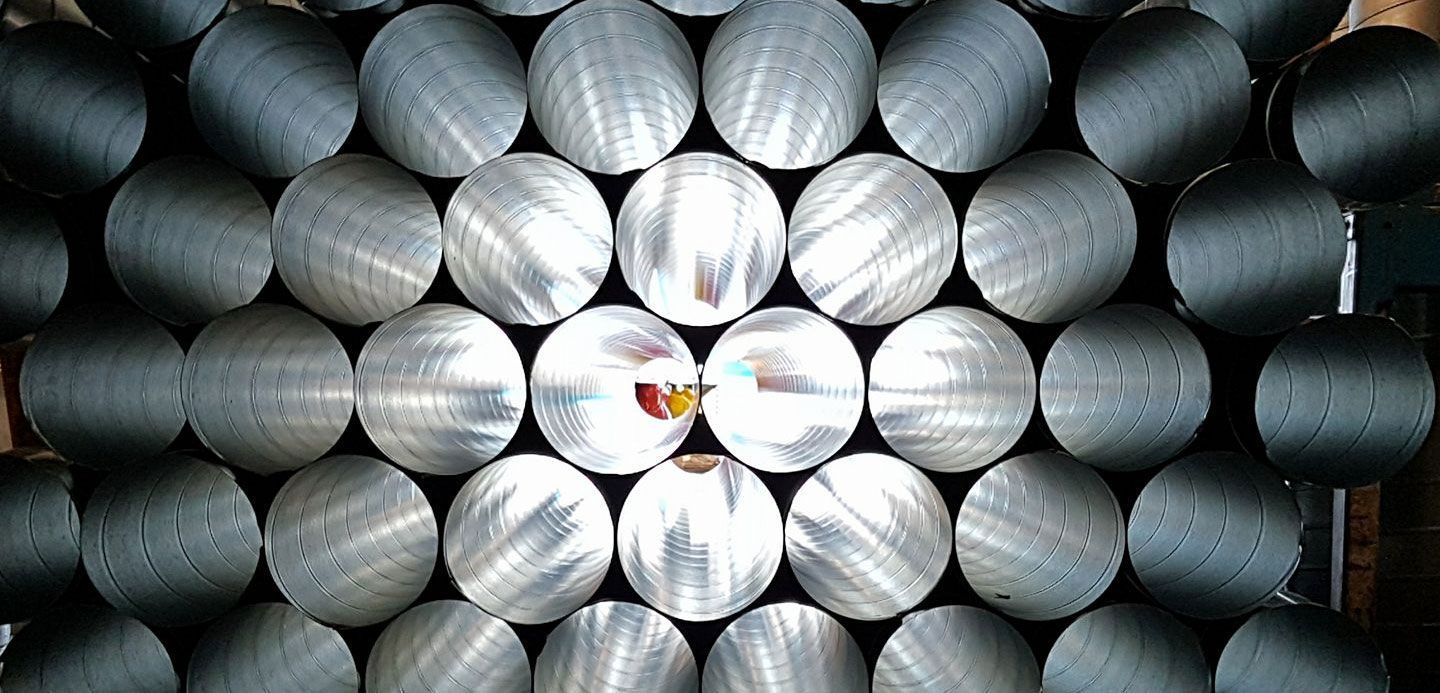
The circular profile gives spiral ductwork natural rigidity.
Rectangular ductwork, particularly at larger dimensions, may require additional reinforcement to prevent deformation and maintain structural integrity.
Reducing reinforcement can simplify both manufacture and handling.
Simpler Supports
Round ductwork can also allow relatively straightforward hanging and support arrangements in suitable applications.
The easier a duct section is to position, support and connect, the easier it becomes for installation teams to maintain momentum along a run.
Less Site Work
The more of the HVAC system that arrives accurately fabricated and ready to install, the less labour is required to alter or assemble components on site.
Combining spiral ductwork with accurately manufactured bends, branches, reducers, take-offs and other fittings can turn sections of the HVAC system into a highly repeatable installation process.
For contractors working against tight construction programmes, that predictability can be extremely valuable.
Space For Other Services
Circular ducting's profile can allow breathing space for other services with no loss of airflow versus a similar diameter rectangular profile.
Is spiral ducting more efficient than rectangular ducting?
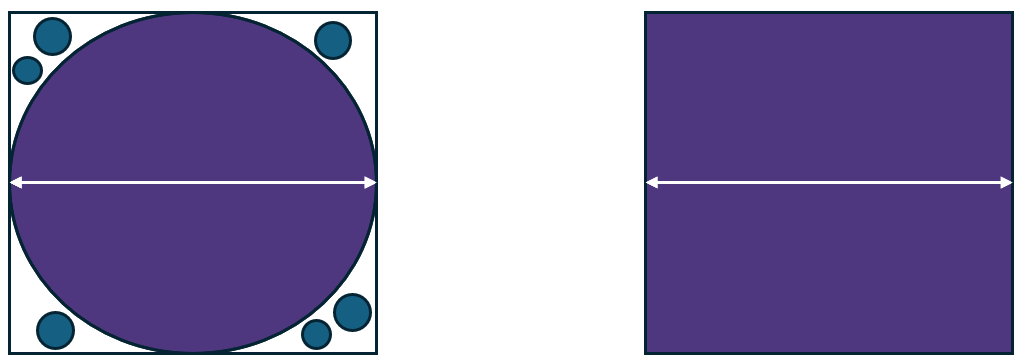
Round spiral ducting generally provides an efficient airflow path because its circular profile has a favourable relationship between cross-sectional area and perimeter.
Air does not have to negotiate the corners found in rectangular ductwork, while the reduced perimeter required for a given duct area can help reduce friction, moving air more efficiently. For the same airflow, round duct has the smallest perimeter. A square duct has about 13% more perimeter, while a 4:1 rectangular duct has roughly 40% more, increasing friction and noise.
The construction of spiral ductwork can also help control leakage. Long spiral sections can have fewer transverse joints than equivalent runs assembled from shorter sections.
That doesn't mean rectangular ductwork is inherently inefficient. A correctly designed and installed rectangular system can deliver excellent performance. However, the aspect ratio becomes important.
Very wide, shallow rectangular ducts may solve a spatial problem but can increase the amount of sheet metal required and the surface area in contact with the moving air.
The best duct design selection therefore balances space constraints against airflow and material efficiency rather than considering any one factor in isolation.
Does spiral ducting use less steel?
For equivalent duct cross-sectional areas, round ducting can require less sheet metal than rectangular ducting because a circle encloses an area with a comparatively small perimeter.
This can create advantages beyond the initial material cost.
Less material can mean:
- lower duct weight
- easier handling
- potentially simpler supports
- less material to transport
- reduced installation effort.
Again, these benefits become increasingly important when considered across an entire commercial HVAC project rather than an individual section of duct.
When is rectangular ducting the better choice?
The biggest advantage of rectangular ducting is its flexibility.
Buildings rarely provide HVAC designers with unlimited space. Ductwork needs to coexist with structural elements, electrical services, plumbing, fire protection systems, cable trays and other mechanical services.
A rectangular duct can change its width-to-height ratio while maintaining the cross-sectional area required for airflow.
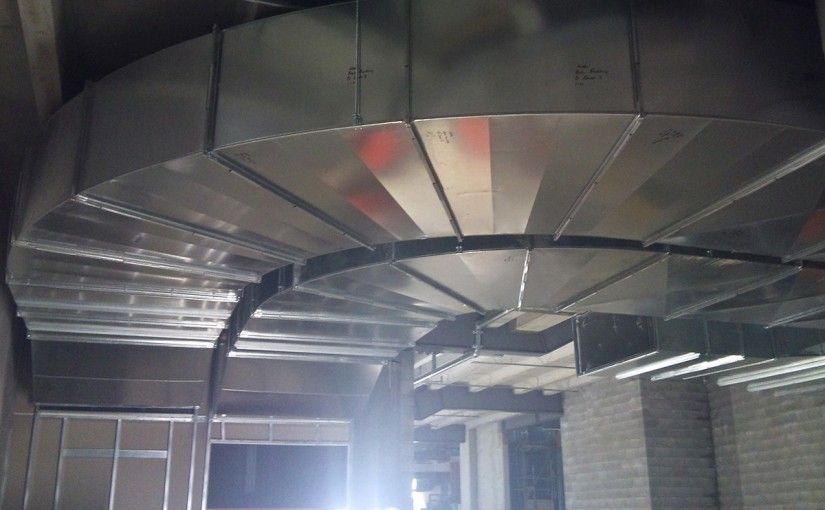
Where ceiling depth is restricted, for example, a wide, shallow rectangular duct may fit where an equivalent round duct simply cannot.
Rectangular ducting is therefore particularly useful for:
- congested ceiling spaces
- restricted service zones
- plant rooms
- large supply and return air connections
- transitions to air handling equipment
- complex building geometries
- areas requiring highly customised duct dimensions.
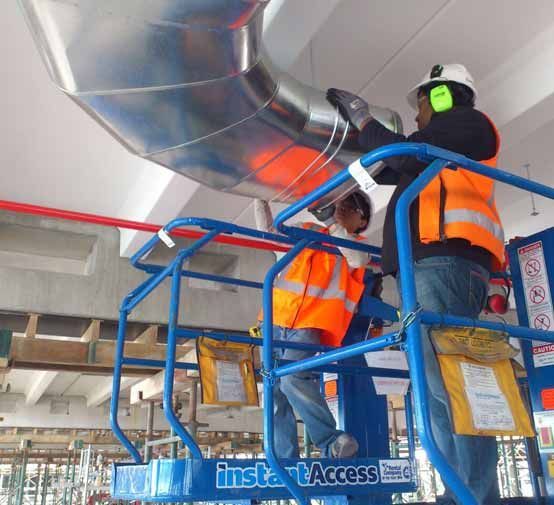
Modern custom steel ducting fabrication makes it possible to manufacture rectangular ductwork accurately around complex layouts.
The key is to use that flexibility where it provides a genuine project benefit rather than necessarily making rectangular ductwork the default throughout the system.
Which is faster to fabricate: rectangular or spiral ducting?
Spiral ductwork lends itself particularly well to automated production.
Straight duct can be manufactured efficiently and combined with standardised bends, tees, reducers, branches and other components.
Rectangular HVAC fabrication has also become increasingly automated, but custom rectangular systems can involve more individual manufacturing operations, particularly where projects contain numerous different dimensions and fittings.
For large projects, however, manufacturing speed alone is not the most useful measure.
The real question is:
How quickly can the ductwork move from drawing to manufacture to installed system?
A duct system that is quick to manufacture but labour-intensive to install may not produce the fastest project outcome.
This is why fabrication and installation should ideally be considered together.
Which costs less: rectangular or spiral ducting?
Comparing the purchase price of the duct alone can give an incomplete picture. The more useful comparison is total installed cost.
This can include:
- sheet metal and other materials
- fabrication
- reinforcement
- fittings
- freight and handling
- supports
- site labour
- sealing and jointing
- site modifications
- programme implications.
Spiral ducting can have advantages across several of these areas. Material-efficient construction can reduce the amount of steel required, while longer sections, fewer joints and relatively straightforward supports can potentially reduce installation labour.
On a large project, labour savings can outweigh relatively small differences in the initial price of the ductwork. This is particularly relevant where contractors are dealing with labour shortages, restricted site access or tight installation programmes.
Can spiral and rectangular ducting be used together?
Yes – and for many commercial HVAC projects, this can provide the best solution.
There is no requirement to choose one duct format for an entire building.
Rectangular ductwork can be used where building constraints demand it, while spiral ductwork can be introduced where space opens up and longer, more efficient runs become possible.
For example, a system might use rectangular ducting through a congested plant room or ceiling void before transitioning to spiral ducting through a warehouse, retail space or other open area.
This approach allows contractors to use the flexibility of rectangular ductwork without giving up the potential installation and airflow benefits of spiral ducting elsewhere.
Five questions to ask before choosing rectangular or spiral ducting
1. Could spiral ducting physically fit?
Start by identifying the available service space.
If there is sufficient clearance for round ductwork, it is worth evaluating the potential airflow, fabrication and installation advantages before defaulting to rectangular ducting.
2. How much ductwork needs to be installed?
The longer the duct runs, the more important installation efficiency becomes.
Small reductions in installation time per metre can become significant across a major commercial project.
3. How congested is the service space?
Where ducts need to pass around other services or through shallow ceiling voids, rectangular ducting may provide the dimensional flexibility required.
4. How much site labour will each option require?
Don't compare fabrication prices alone.
Consider the number of sections, joints, supports and fittings that installation teams will need to handle and assemble.
5. What provides the lowest total installed cost?
The lowest-cost piece of ductwork is not necessarily the lowest-cost HVAC system.
Materials, fabrication, logistics, labour and programme risk should all form part of the comparison.
Oval Ducts: Best of Both Worlds or Compromise?
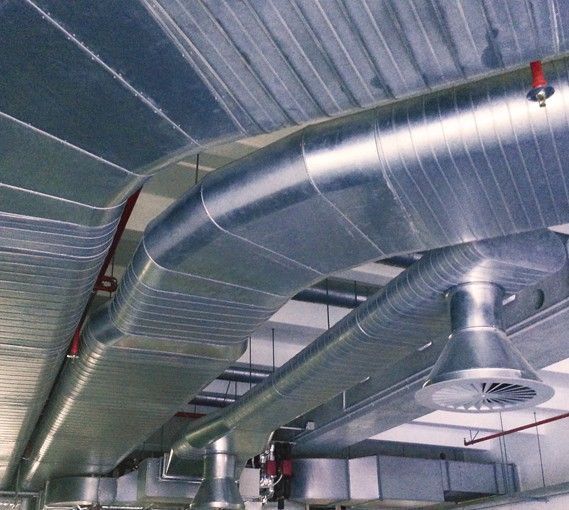
Oval ducting can combine round-duct performance with rectangular-duct space efficiency.
Its use will depend on the relative weighting of factors such as design aesthetic, available space and air system requirements.
For the right combination, its use is certainly not compromise, but a solution providing the best aspects of round and rectangular options.
As flattened round ducts, it offers:
- Better airflow than rectangular: Smoother airflow than rectangular ducts, though not as efficient as round ducts.
- Lower profile: Fits shallower spaces with minimal performance loss.
- Aesthetically pleasing: Often used in exposed or architectural applications for a clean, modern look.
Frequently Asked Questions
Is spiral ducting better than rectangular ducting?
Where sufficient space is available, spiral ducting can offer advantages in airflow efficiency, material use, structural rigidity and installation speed. Rectangular ducting is generally more flexible where space is restricted.
Why can spiral ducting be faster to install?
Long, rigid spiral duct sections can reduce the number of individual components and joints required along a run. This can reduce handling, connection, sealing and assembly time on site.
Does spiral ducting use less metal than rectangular ducting?
For equivalent cross-sectional areas, round ducting can require less sheet metal because a circular shape provides an efficient relationship between perimeter and enclosed area.
Does spiral ducting reduce HVAC installation costs?
It can. The potential savings come not only from material efficiency but from reduced installation labour, fewer joints, simpler supports and faster assembly on suitable duct runs.
When should rectangular ducting be used instead of spiral?
Rectangular ducting is particularly useful in shallow ceiling voids, congested service areas, plant rooms and other locations where duct dimensions need to be adapted around the building structure or other services.
Can rectangular and spiral ducting be combined in the same HVAC system?
Yes. Using rectangular ductwork where space dictates and spiral ductwork for longer, less constrained runs can provide an effective balance between spatial flexibility, airflow performance and installation efficiency.
Related Reading
Firstly, find the best HVAC ducting supplier:
Choose the Right Fabrication Partner for Reliability, Cost & Timelines
Get the fundamentals right of quality performance:
The Hidden Value of High-Quality Ducting
Then explore how to design ducting that can adapt:
Designing for Flexibility in Modern HVAC Systems
Understand why on-time delivery is everything:
Availability & Speed in Construction
Understand the true costs of installation
Labour Hire vs Managed Installation