
Projects

Steel vs Concrete Culverts: Best Options for NZ & Australia Civil & Rural Projects

Paul Bondsfield • May 18, 2026

Steel vs Concrete vs Plastic Culvert: What Actually Performs Better in the Field?


When it comes to culvert, the material choice isn’t just a design decision — it directly affects installation time, lifespan, transport, cost, and how well the system performs under real-world conditions.


On paper, concrete, PVC/plastic, and steel culvert can all meet basic requirements.  But once you factor in handling, ground conditions, logistics, and long-term durability, the differences become much clearer.


This article breaks down where steel culvert has a genuine advantage — particularly across civil infrastructure, rural works, and fast-moving construction projects.

1. Strength-to-Weight Ratio: Where Steel Leads


Steel culvert offers a unique combination: High structural strength without the weight penalty.


  • Concrete: Extremely strong in compression, but very heavy
  • Plastic/PVC: Lightweight, but limited structural capacity under load
  • Steel: Strong, flexible, and significantly lighter than concrete


Why it matters:


  • Easier transport to remote or restricted-access sites
  • Faster handling and positioning
  • Reduced need for heavy lifting equipment


For rural contractors or projects with limited access, this alone can change the economics of a job.


2. Installation Speed: Time is a Real Cost


In today’s environment, labour and time are often the biggest cost drivers.


Steel culvert is typically:

  • Supplied in manageable sections
  • Easier to align and assemble
  • Faster to backfill and commission


Compared to alternatives:

  • Concrete culvert often requires cranes, precise placement, and longer install times
  • Plastic culvert is quick to place but can require more careful bedding and backfill control to avoid deformation


Steel often delivers faster install programmes with fewer delays, especially on projects where sequencing matters.

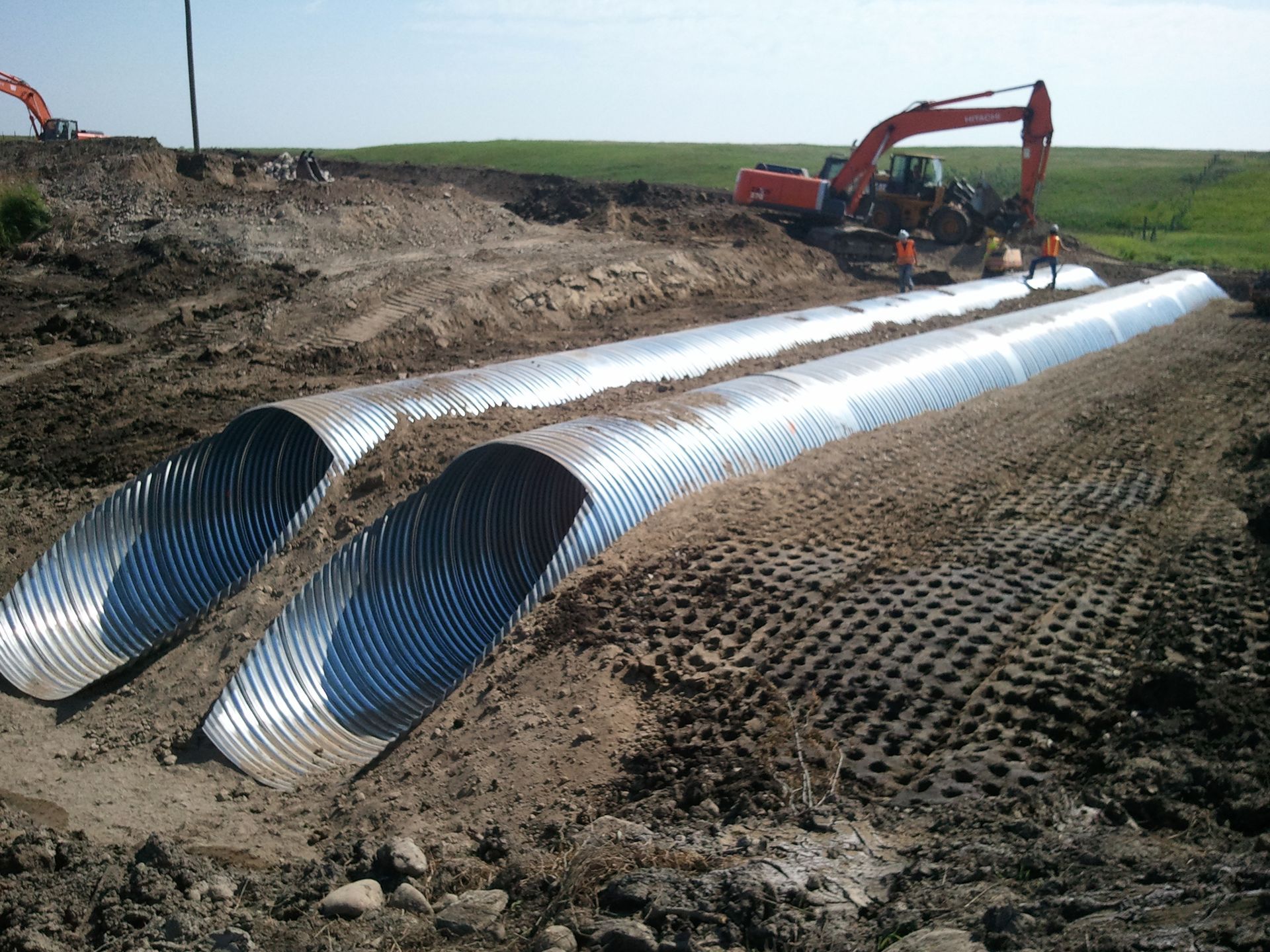
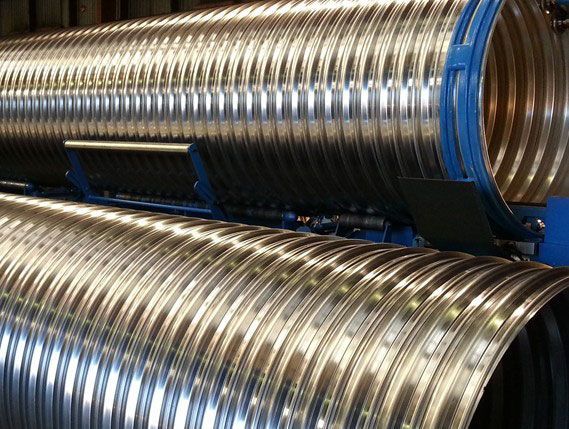
SwiftSteel Culvert - built tough


3. Durability and Lifespan in Harsh Conditions


Modern steel culvert isn’t just raw steel — it’s an engineered system.


With:

  • Galvanised coatings
  • Polymer coatings (where required)
  • Proper design and installation


Steel culverts can achieve long design lives, even in aggressive environments.


Key comparisons:

  • Concrete: Can crack over time, especially with ground movement or poor installation
  • Plastic: Susceptible to deformation under load or temperature variation
  • Steel: Offers a balance of strength and flexibility — it can move slightly with the ground without failing


That flexibility is often overlooked — but in real-world conditions, it’s critical.

4. Performance and Design Flexibility


Steel culvert can be manufactured in a wide range of:

  • Diameters (300mm to 2000mm)
  • Lengths (3m - 10m)
  • Steel gauges


This gives engineers more flexibility to:

  • Match hydraulic requirements
  • Optimise flow rates
  • Fit site constraints


Compared to:

  • Concrete: Often limited to standard sizes and shapes
  • Plastic: Typically limited in diameter for higher-load applications


Steel allows for customisation without major cost penalties, which is valuable in both civil and rural projects.


5. Transport and Logistics: A Hidden Cost Factor


Moving culvert to site is often underestimated.


Steel’s lighter weight means:

  • More units per truckload
  • Lower freight costs
  • Easier handling on-site


Concrete, by contrast:

  • Requires heavy transport
  • Increases fuel and logistics costs
  • Can be harder to deliver to remote locations


For rural projects in particular, steel can significantly reduce total installed cost, not just material cost.

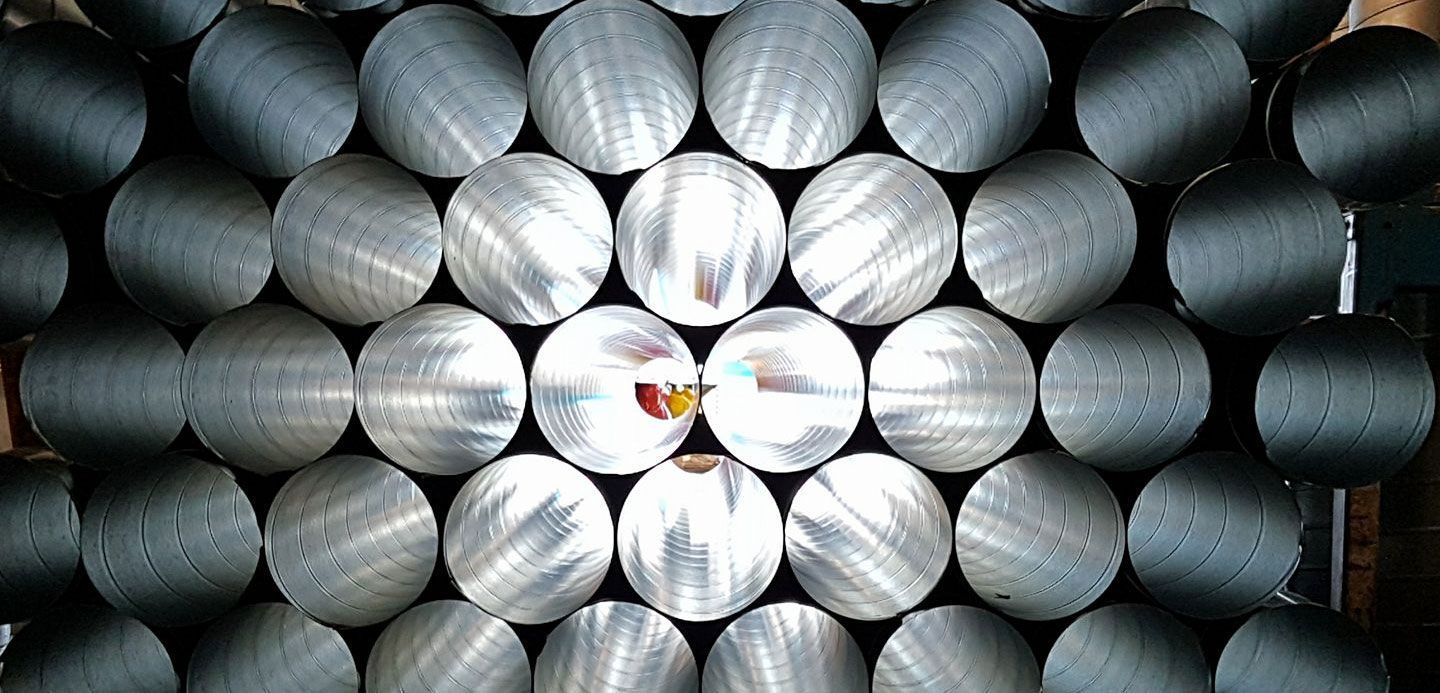
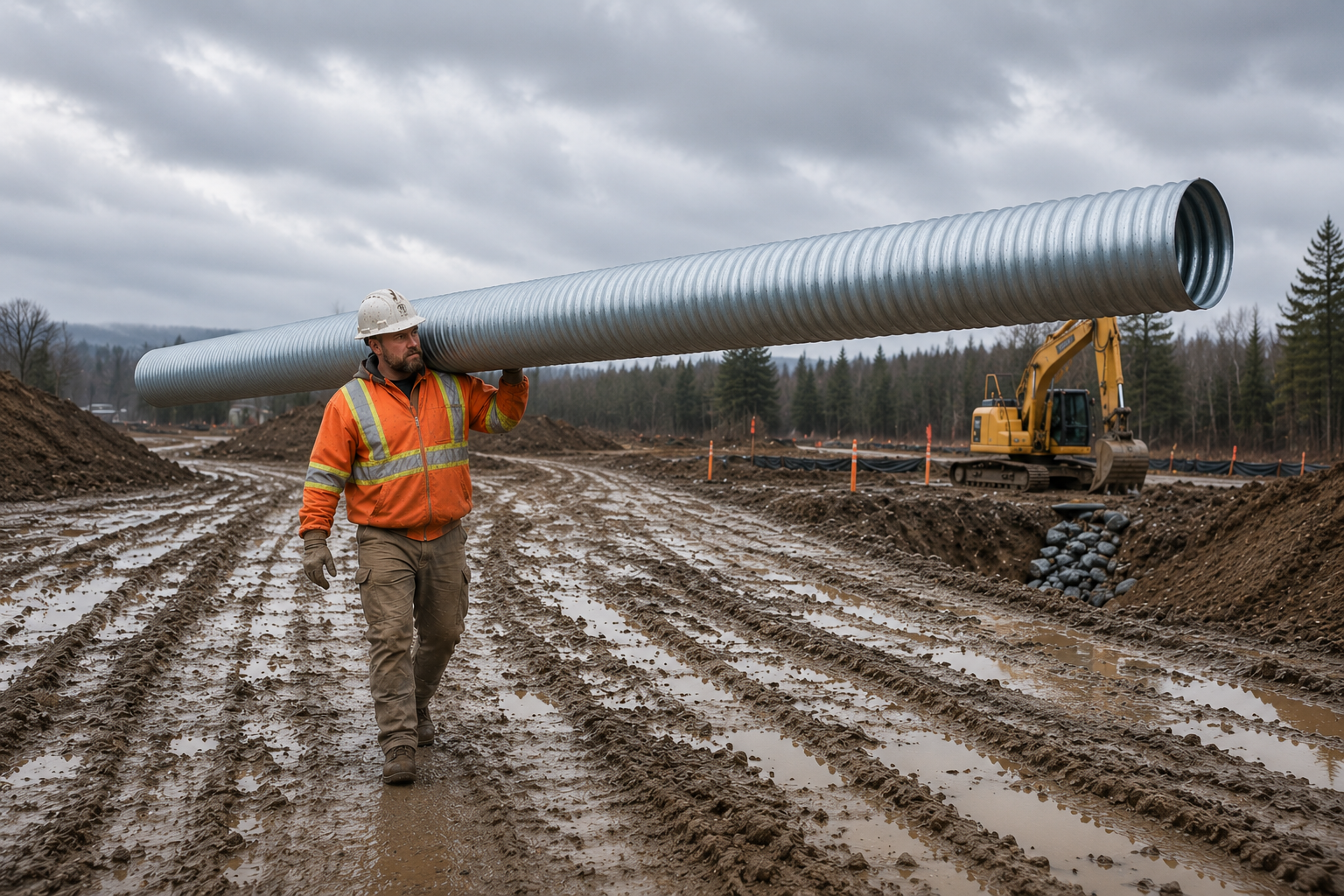
Steel culvert light enough to carry

6. Whole-of-Life Value (Not Just Purchase Price)


It’s easy to compare culvert on upfront cost alone. But that rarely reflects the real cost of ownership.


Steel culvert often delivers better value when you consider:

  • Faster installation (lower labour cost)
  • Reduced plant requirements
  • Lower transport costs
  • Strong durability when correctly specified


Steel isn’t always the cheapest line item —  but it is often the most cost-effective solution overall.


Where Steel Culvert Makes the Most Sense


Steel culverts are particularly well suited to:


Civil Infrastructure

  • Road and bridge drainage
  • Stormwater systems
  • Projects with tight timelines


Rural Applications

  • Farm crossings
  • Water management
  • Remote or difficult-access locations


Construction & Infrastructure Projects

  • Temporary or permanent drainage
  • Sites where speed and flexibility matter


Final Thought: It’s About Practical Performance


Engineers can design to almost any material. But contractors have to install it, and asset owners have to live with it.


Steel culvert sits in a practical middle ground:

  • Strong, but not overly heavy
  • Durable, but not brittle
  • Flexible, but not weak


That balance is why it continues to be widely used across both civil and rural environments.


Need Help Choosing the Right Culvert?


If you're working through culvert options for an upcoming project — whether it’s civil infrastructure or rural drainage — it’s worth looking beyond specs and considering how the product performs on-site.


A quick conversation can often save time, cost, and rework later.


Related Reading


Start with the fundamentals of quality performance:
The Hidden Value of High-Quality Ducting


Then explore how to design ducting that can adapt:
Designing for Flexibility in Modern HVAC Systems


Understand why on-time delivery is everything:
Availability & Speed in Construction


Remove delays on site with readily available ducting accessories
By Paul Bondsfield March 19, 2026
Discover why HVAC projects run late and how stocked ducting components and smarter supply strategies can keep construction programmes on track.
Te Kaha - Christchurch Stadium - With ALO Ducting
By Paul Bondsfield January 21, 2026
In compressed construction programmes, ducting availability and local manufacturing offer major advantages. Learn how supply reliability reduces delays and cost risks on site.
ARLO Express Sheetmetals - Brisbane
By Paul Bondsfield January 21, 2026
How to evaluate ducting partners beyond metal supply. A guide to assess technical support, documentation, testing, and on-site services for major HVAC projects.
Complex duct installation
By Paul Bondsfield January 21, 2026
Modern buildings change during construction. Learn how flexible ducting systems reduce risk, support fire safety changes, and improve installation speed.
commercial HVAC ducting
By Paul Bondsfield January 21, 2026
High-quality ducting impacts energy efficiency, comfort, fire safety, and lifecycle cost in commercial buildings. Learn what defines a performance ducting system and the standards to follow.
Te Kaha – One New Zealand Stadium
October 30, 2025
Christchurch, New Zealand We were honoured to provide the precision-engineered ductwork solutions for Te Kaha, a landmark multi-use arena designed to revitalise Christchurch’s sporting and cultural heart. Our systems support the complex HVAC infrastructure required for a venue that accommodates tens of thousands of spectators, while meeting stringent expectations around natural ventilation, indoor air quality and resilience. By integrating our high-performance air-ducting within a mechanically-efficient, future-focused building envelope, our contribution helps deliver a world-class facility that stands for durability, sustainability and community pride.
October 30, 2025
Auckland, New Zealand We were pleased to supply the air-ducting systems for the new headquarters-style facility of Orams Marine in Auckland. Located in the heart of the marine precinct, this advanced multi‐storey building complements the company’s world-class superyacht refit yard and mixed-use marine village, featuring open offices, workshops and service zones designed to support high-value marine activity. Our precision-engineered ductwork helps deliver high‐quality indoor air across varied areas—from office floors to workshop bays—while aligning with the site’s robust industrial needs and high-performance building goals.
October 30, 2025
Auckland, New Zealand We were proud to supply the air-ducting systems for Fonterra Co-operative Group’s new global headquarters in Auckland. This seven-storey, 16,000 m² building consolidates staff from multiple sites into a high-performance workplace defined by open floor plates, a central atrium and world-class sustainability features. With fully electric heating, rainwater harvesting, a high-efficiency thermal envelope and an advanced ventilation strategy, our ductwork plays a key role in achieving the building’s 5-Green Star base-build rating and readying it for even higher targets. By integrating our precision-manufactured duct systems seamlessly into the fit-out and services architecture, we supported the building’s flexible activity-based work zones and the company’s ambition for a future-proof, low-carbon and people-centric headquarters.
Interior of a large building under construction. Metal roof, exposed ductwork, construction materials and machinery.
October 30, 2025
Auckland, New Zealand Express Sheetmetals was proud to supply the air-ducting systems for Fisher & Paykal’s new global headquarters — a landmark development that brings together the company’s people, innovation, and production under one roof. Designed for collaboration and sustainability, the building combines open, flexible workspaces with advanced mechanical systems to ensure a healthy and efficient environment. Our precision-engineered ducting supports the complex airflow requirements across office, research, and production areas, contributing to the project’s high-performance, low-carbon objectives and helping create a workplace that truly reflects Fisher & Paykal’s forward-thinking ethos.
February 23, 2020
The chic and modern addition to the University of Auckland, B507 Park West Development - Grafton campus, boasts a value of $100m+, spans 19,500m², and has five occupied levels and includes a carpark, acoustic booths, teaching spaces, clinics and offices. Express was subcontracted to Numecon Contracting to deliver the job within a tight timeframe, beginning in October 2018 and going through to February 2020. “Establishing consistent and clear communications has ensured all aspects of this job were completed with minimum fuss and maximum accuracy. The job was modelled and provided in Revit 3D and which enabled a simple and accurate translation to manufacturing requirements. This and the timely release of high-quality mechanical drawings from Numecon via Aconnex really improved the ability to plan and manufacture this project in support of the site program and ensure manufacturing was completed accurately - first time - to very high standards”, Mike Arcari – Director Production, Express Sheetmetals. Numecon notes that Express excels in responding to site demands in a timely manner, their QA and quality of install are top notch, and their can-do attitude is greatly appreciated. According to Paul O’Callaghan, Director of Numecon Contracting, Express takes the initiative to use innovative technology that significantly improves accuracy and therefore efficiency. “It was a relatively simple space-restricted project, but it had to be done fast, and the accuracy had to be there”, explains Paul. On Express, Paul had this to say, “They are a good company. They have good systems and good people.” On their relationship, “It’s construction. You’re in people's faces. You’re building things. You’re under pressure to deliver. But at the end of the day, they have the right people.” “I liken it to an old Māori proverb that goes like this: ‘He aha te mea nui o tea o? He tangata, he tangata, he tangata. It translates to: ‘It is the people, it is the people, it is the people.’ And this explains Express Sheetmetals to a tee”, Paul finishes. “Working in an environment where there was fantastic alignment and communication between the head contractor, the Numecon team, and ourselves has made this project a pleasure to complete. With stability in the build program, completeness of design and very strong on-site management of the mechanical aspects of the project, we were able to place additional emphasis on quality to ensure we met the very highest of customer expectations” , Sander Dales – Director Operations.
Show More